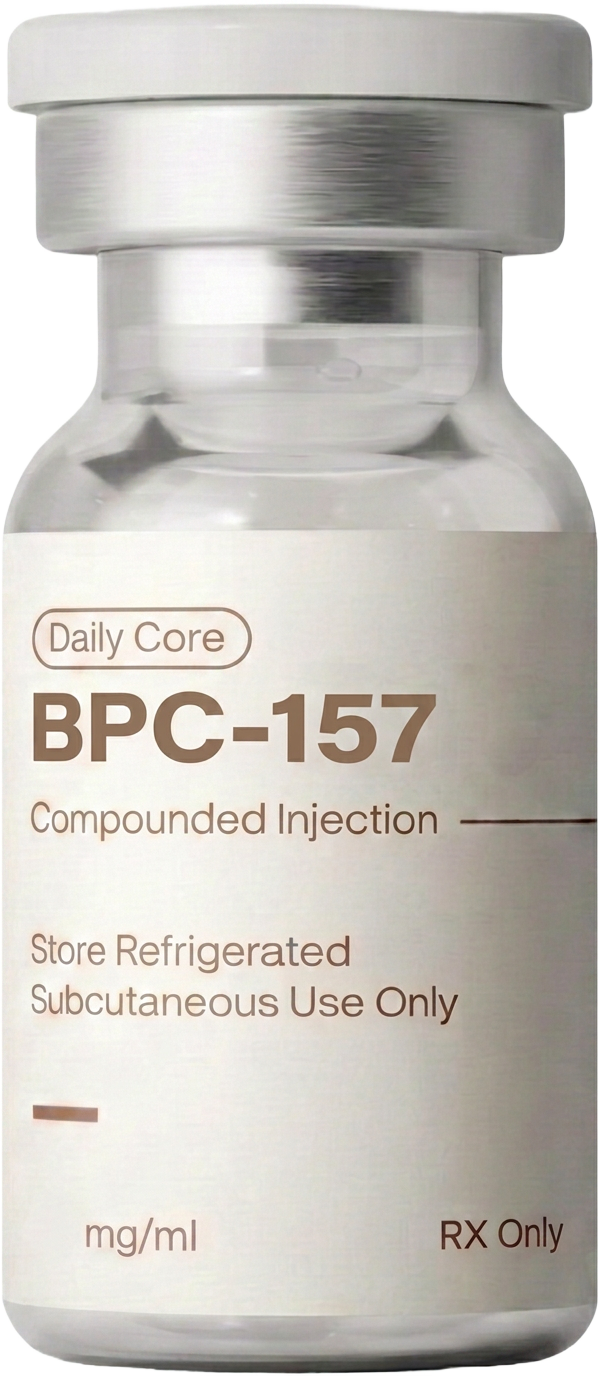
BPC-157
A repair-focused peptide studied for soft-tissue healing, joint comfort, and gut lining integrity.
For the things that never quite heal.
BPC-157 is a body-protection compound studied for its role in tissue repair — the tendon, joint, and gut-lining kind of healing that tends to stall out when you keep training through it.
How it works
BPC-157 is a synthetic peptide sequence derived from a body-protection compound found in gastric juice. Research points toward improved angiogenesis — the formation of new blood vessels — which is a rate limiter for how quickly tendon, ligament, and gut tissue repair.
Because it works on repair pathways rather than masking symptoms, it's typically run in defined cycles alongside rehab, load management, and adequate protein — not as a permanent daily habit.
What to expect
- CadenceOne self-administered subcutaneous injection daily, typically run in 4–8 week cycles.
- FormatBPC-157 — a synthetic 15-amino-acid peptide sequence derived from a protein found in gastric juice.
- ResponseNagging soreness and joint comfort often shift within 2–4 weeks; deeper tissue work takes a full cycle.
- Good fit ifYou're managing a nagging soft-tissue issue, training through wear and tear, or working on gut comfort.
- Side-effect patternGenerally well tolerated. Mild injection-site irritation is the most common report.
BPC-157 benefits, by use case
Most of what's known about BPC-157 comes from animal and laboratory research, with limited published human trials. Here's what it's studied for, and what patients most often come to us hoping to change.
The most-studied use. Research points to improved angiogenesis and fibroblast activity — the blood supply and cell signaling that limit how fast tendon and ligament tissue rebuilds.
Patients most often report that nagging, low-grade joint soreness quiets first, usually in weeks two to four, before load tolerance improves.
BPC-157 is derived from a protein found in gastric juice and has been studied for intestinal lining integrity — the reason it shows up in gut-comfort protocols.
Used in cycles by active adults working through repetitive wear and tear, alongside rehab, load management, and adequate protein.
Dosing and cycle length
BPC-157 is dosed daily and run in defined cycles rather than taken indefinitely. Your Taggs clinician sets your dose and cycle length — the pattern below is what a typical protocol looks like.
Injection vs oral BPC-157
Both formats circulate online. They are not interchangeable, and the difference comes down to where the peptide ends up.
The format used in most research and the one Taggs prescribes. It reaches systemic circulation, which is why it's the choice for tendon, ligament, and joint goals.
Peptides are largely broken down in the digestive tract, so oral BPC-157 is generally discussed only for gut-focused goals — and with far less supporting evidence.
Who it's for
BPC-157 fits adults working through nagging soft-tissue wear, joint discomfort, or gut irritation who want a clinician-guided cycle rather than an indefinite protocol.
- A nagging tendon, joint, or soft-tissue issue that hasn't fully resolved.
- Active adults training through repetitive wear and tear.
- You're working on gut comfort alongside diet changes.
- You want a defined cycle with clinician check-ins, not an open-ended stack.
- —Active or recent malignancy without oncologist sign-off.
- —Currently pregnant, planning pregnancy, or breastfeeding.
- —An acute injury that hasn't been imaged or evaluated in person.
- —Under 18, or otherwise not appropriate on clinician review.
Your first 90 days
BPC-157 is usually run as a cycle, reassessed, and then cycled off. Comfort tends to move before capacity does.
- Days 1–30Comfort begins to shift
Daily dosing starts alongside whatever rehab or load management your situation calls for. Many patients notice nagging soreness quieting in weeks two to four.
- Days 31–60Capacity returns
Movements that used to flare tend to tolerate more load. Your clinician reviews how the area is responding and adjusts cycle length.
- Days 61–90Cycle off and reassess
Most protocols run 4–8 weeks then pause. Your clinician confirms whether the gains held, whether another cycle is warranted, or whether to switch approach.
Safety and what the evidence does — and doesn't — show
- BPC-157 is not FDA-approved for any indication. It is prescribed and compounded for individual patients after a clinician review.
- Most published research is animal and laboratory work. Human trial data is limited, so expected benefits should be treated as plausible rather than proven.
- It's generally well tolerated in reported use; mild injection-site irritation is the most common complaint.
- It is on the WADA Prohibited List — competitive athletes subject to drug testing should not use it.
- It isn't appropriate with active or recent malignancy without oncologist sign-off, during pregnancy or breastfeeding, under 18, or for an acute injury that hasn't been evaluated in person.
- Tell your clinician about every medication and supplement you take so the full stack is reviewed together.
BPC-157 questions, answered
What are the benefits of BPC-157?+
BPC-157 is studied for soft-tissue and tendon repair, joint comfort, gut lining integrity, and recovery between hard training blocks. Most of that evidence comes from animal and laboratory research rather than large human trials, so the honest framing is 'promising and plausible,' not proven.
How long does BPC-157 take to work?+
Patients most often report nagging soreness and joint comfort shifting in weeks two to four. Deeper tissue work usually needs a full 4–8 week cycle before you can judge whether it helped.
What is a typical BPC-157 dose and cycle length?+
A common protocol is one small subcutaneous injection daily, run in a defined 4–8 week cycle and then paused for reassessment. Your Taggs clinician sets the exact dose and cycle length for your situation — BPC-157 is not meant to be taken indefinitely.
Is injectable or oral BPC-157 better?+
It depends on the target. Injectable BPC-157 is the format used in most research and is preferred for tendon, ligament, and joint goals because it reaches systemic circulation. Oral capsules are largely broken down in the digestive tract, which is why they're generally discussed only for gut-focused goals. Taggs prescribes the injectable form.
Is BPC-157 safe?+
In reported use it's generally well tolerated, with mild injection-site irritation the most common complaint. It has not been approved by the FDA for any indication, long-term human safety data is limited, and it isn't appropriate with active malignancy, in pregnancy or breastfeeding, or under 18.
Is BPC-157 banned in sport?+
Yes. BPC-157 appears on the WADA Prohibited List under non-approved substances, so competitive athletes subject to drug testing should not use it.
Can BPC-157 be stacked with other peptides?+
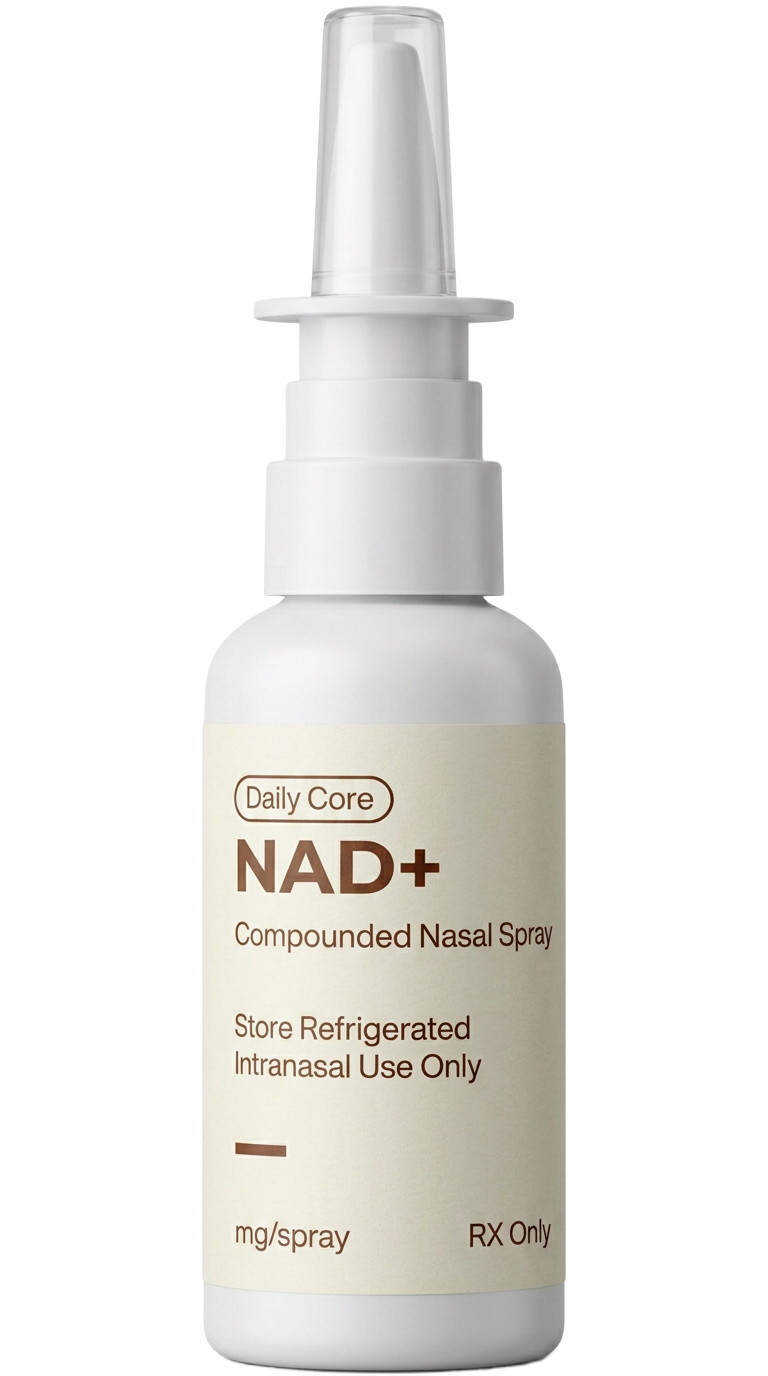
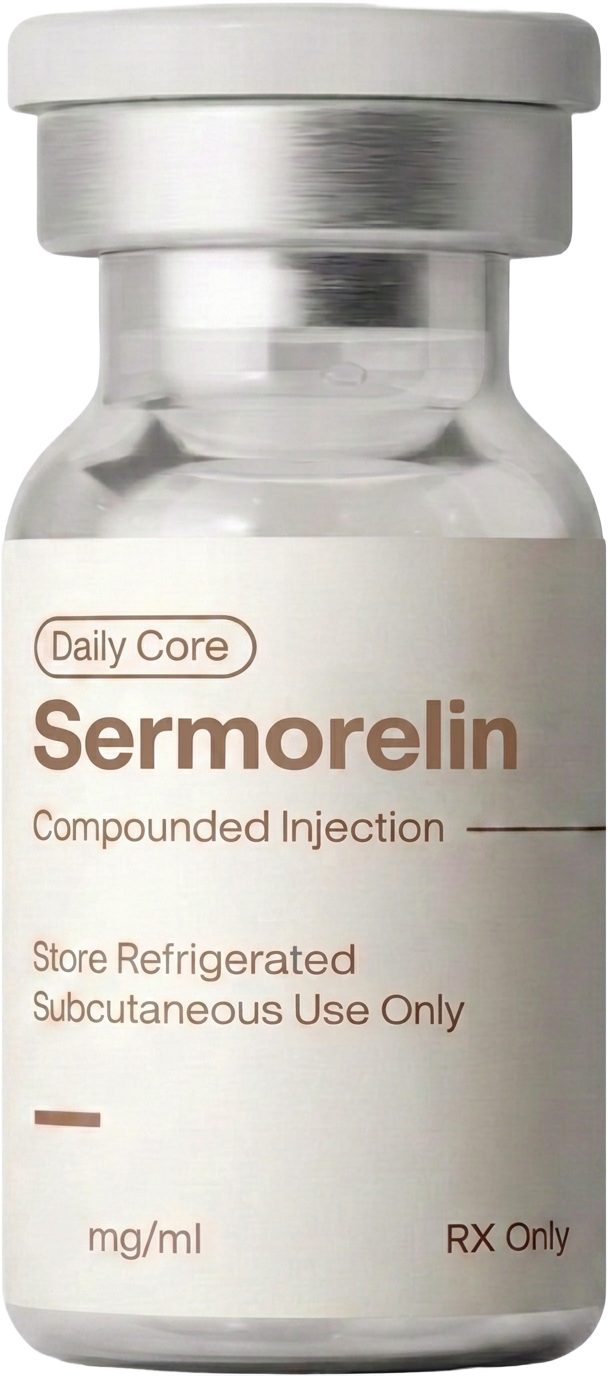
It's frequently paired with recovery- and sleep-oriented options such as Sermorelin, or with NAD+ for energy. Tell your clinician everything you're taking so the stack is reviewed as a whole.
Looking at other Daily Core options? Compare the full lineup.