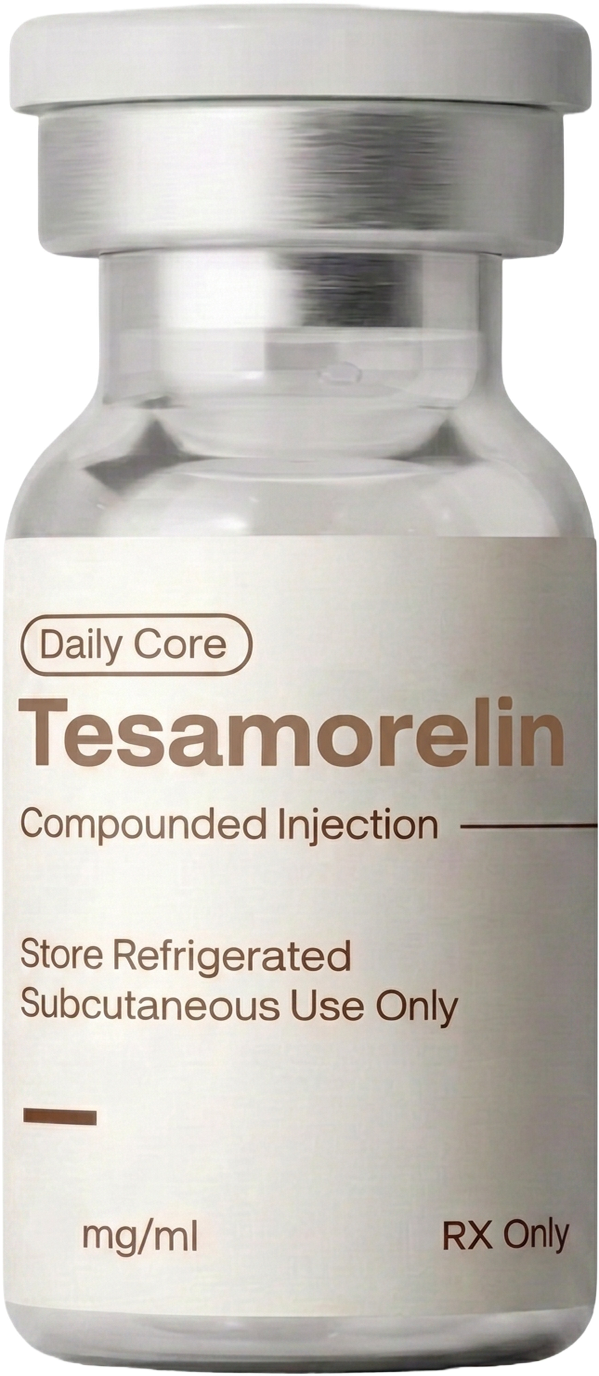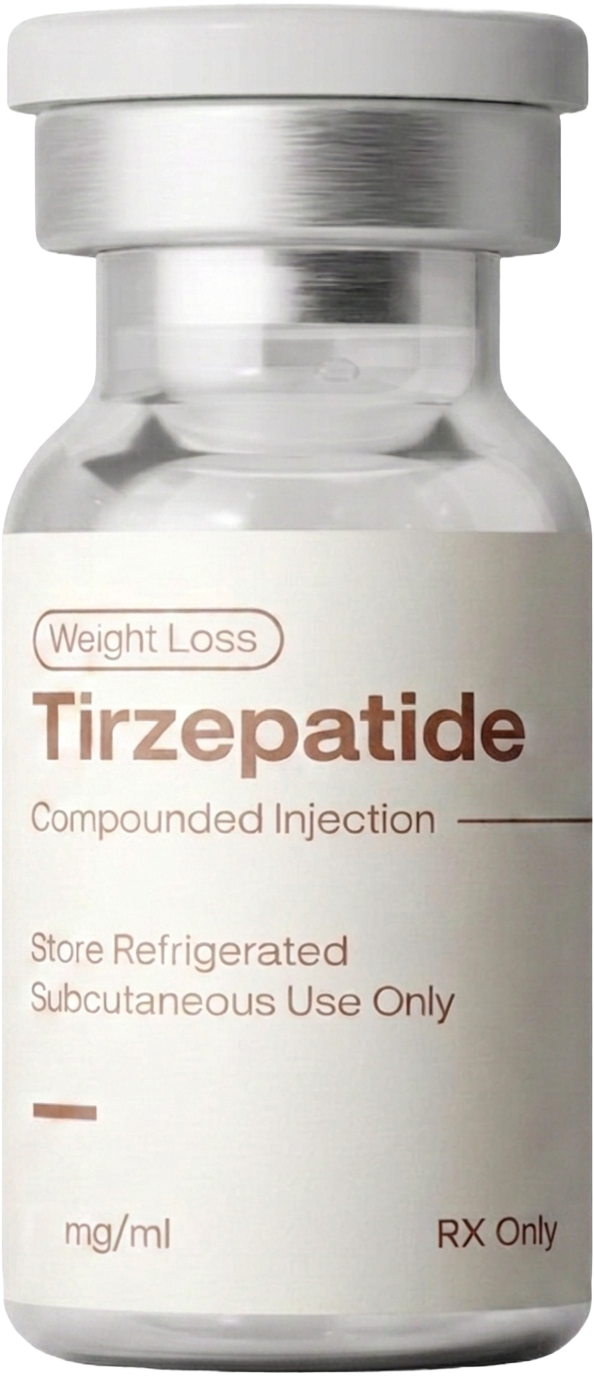
Tirzepatide
A dual GIP+GLP-1 that pairs appetite reduction with improved insulin sensitivity — often chosen for stronger results.
Two signals at once, deeper response.
A once-weekly dual GIP+GLP-1 that combines appetite control with improved insulin sensitivity — often chosen when a stronger response is the goal.
How it works
Tirzepatide acts on two hormones at once — GLP-1 and GIP. That dual signal quiets appetite while also supporting how your body handles glucose, which is why response often deepens past the third month.
Your clinician maps out a titration schedule that prioritizes tolerance, moving up only when you're ready. Slower steps aren't a setback — they're usually why the dose sticks and the side effects don't.
What to expect
- CadenceOnce-weekly self-injection at home.
- DosingStarts at 2.5 mg/week and titrates up to 15 mg as tolerated.
- ResponseStrong appetite reduction, often more pronounced past month 3.
- DeliveryShips with a fine-gauge needle for a quick, comfortable weekly injection.
- Side-effect patternGI symptoms early in titration; a slower step-up typically improves tolerance.
Who it's for
Tirzepatide tends to be the right call when you want a stronger appetite response, when semaglutide has plateaued, or when metabolic health markers are part of the picture. It's not a fit for everyone — a short intake tells us which.
- Adults 18+ with a BMI of 27+ (or 25+ with a weight-related condition).
- Looking for a stronger response than semaglutide typically delivers.
- Comfortable with a once-weekly at-home injection and a patient titration.
- Interested in the metabolic and glucose-handling benefits alongside weight loss.
- —Personal or family history of medullary thyroid carcinoma or MEN 2.
- —History of pancreatitis, severe GI disease, or gastroparesis.
- —Currently pregnant, planning pregnancy, or breastfeeding.
- —Under 18, or with a BMI below the clinical threshold.
Your first 90 days
Tirzepatide titrates in 2.5 mg steps, roughly every four weeks. Because it signals through both GIP and GLP-1, response tends to deepen quarter over quarter — so the first 90 days are less about reaching the 15 mg ceiling and more about landing on a dose you tolerate cleanly.
Titration ceiling: 15 mg weekly. Steps happen in 2.5 mg increments, roughly every four weeks, and only when tolerance allows — your clinician can hold you at any rung.
- Days 1–302.5 mg weeklyOnboarding at 2.5 mg weekly
2.5 mg is a non-therapeutic starter dose — it exists to let your gut adapt to dual GIP+GLP-1 signaling, not to drive weight loss. Expect noticeably earlier fullness and quieter food noise by week two or three. Mild nausea, reflux, or constipation early in titration is common and usually settles within a couple of weeks.
- Days 31–605 mg weeklyStep up to 5 mg weekly
If tolerance is good after four weeks, your clinician moves you to 5 mg — the first true therapeutic dose of tirzepatide, and the point where most patients see steady weekly change. Portions shrink on their own, and the GIP side of the molecule often shows up as better post-meal comfort and glucose handling.
- Days 61–907.5 mg weeklyToward 7.5 mg weekly
Most patients step to 7.5 mg by the end of month three, and average total body weight loss at this stage runs around 8–10%. Tirzepatide keeps working past this point — your clinician decides whether to hold here or continue stepping in 2.5 mg increments toward 10, 12.5, or 15 mg in the months ahead.
Worried about side effects?
Tirzepatide side effects are mostly digestive — nausea, constipation, reflux — and almost always tied to how quickly you step up doses rather than the molecule itself.
Read the GLP-1 side-effect guideWondering what "compounded" means?
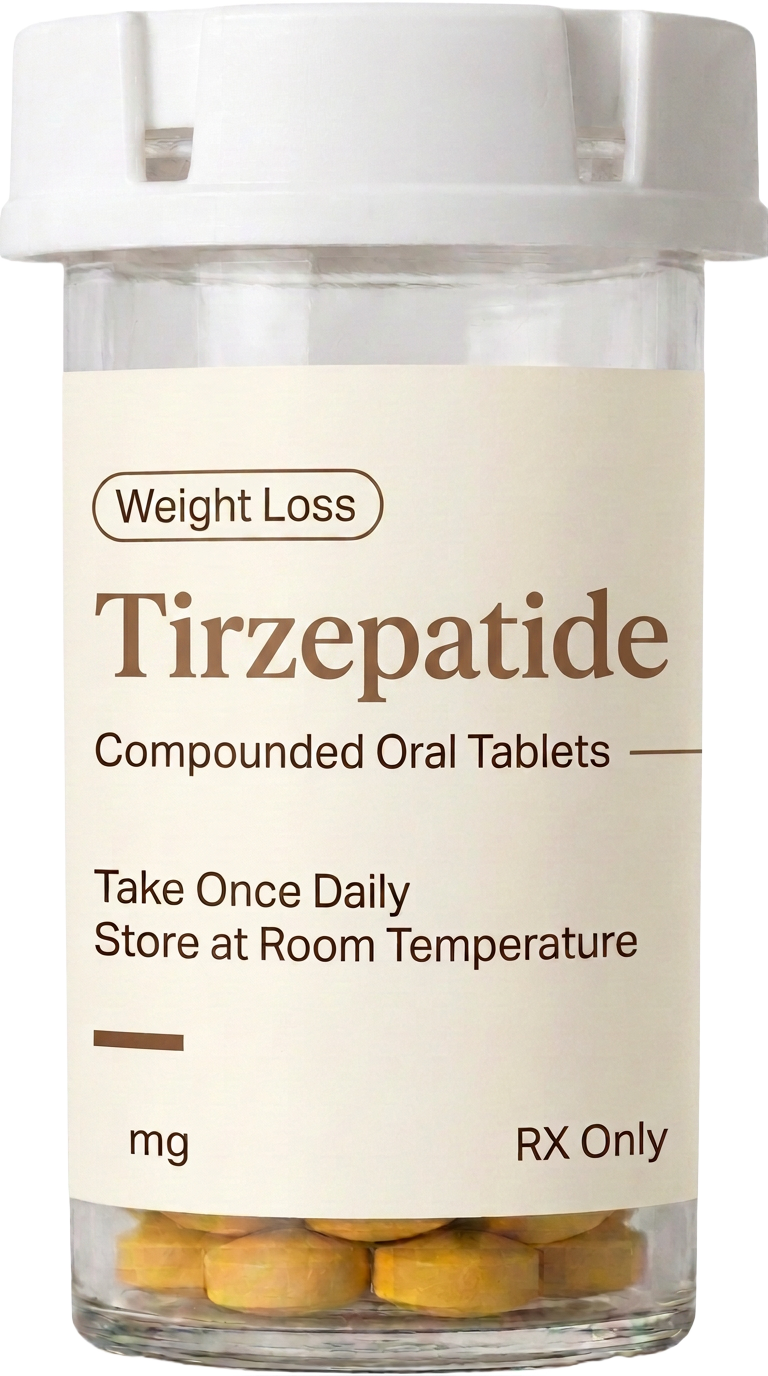
Compounded tirzepatide is prepared for you by a licensed 503A or FDA-registered 503B pharmacy. Here is how that is regulated, where it stands legally, and what it costs next to the brand-name pens.
Read the compounded GLP-1 guideHow to get it onlineWhat the average patient loses
Tirzepatide's dual-agonist mechanism tends to produce a deeper response than single-GLP-1 therapy. The numbers below reflect averages reported in the largest trials — a realistic reference, not a promise. Individual response varies with dose, adherence, food, and movement.
Early response as titration reaches a therapeutic dose.
Momentum deepens noticeably in months four through six.
Typical average at maintenance dose in long-term studies.
Averages are of total body weight loss and are drawn from published trials of tirzepatide (e.g., SURMOUNT program). Individual results vary and are not guaranteed.
Tirzepatide
A dual GIP+GLP-1 that pairs appetite reduction with improved insulin sensitivity — often chosen for stronger results.