Our Hair Growth Products
Clinician-guided regrowth options, all in one place.
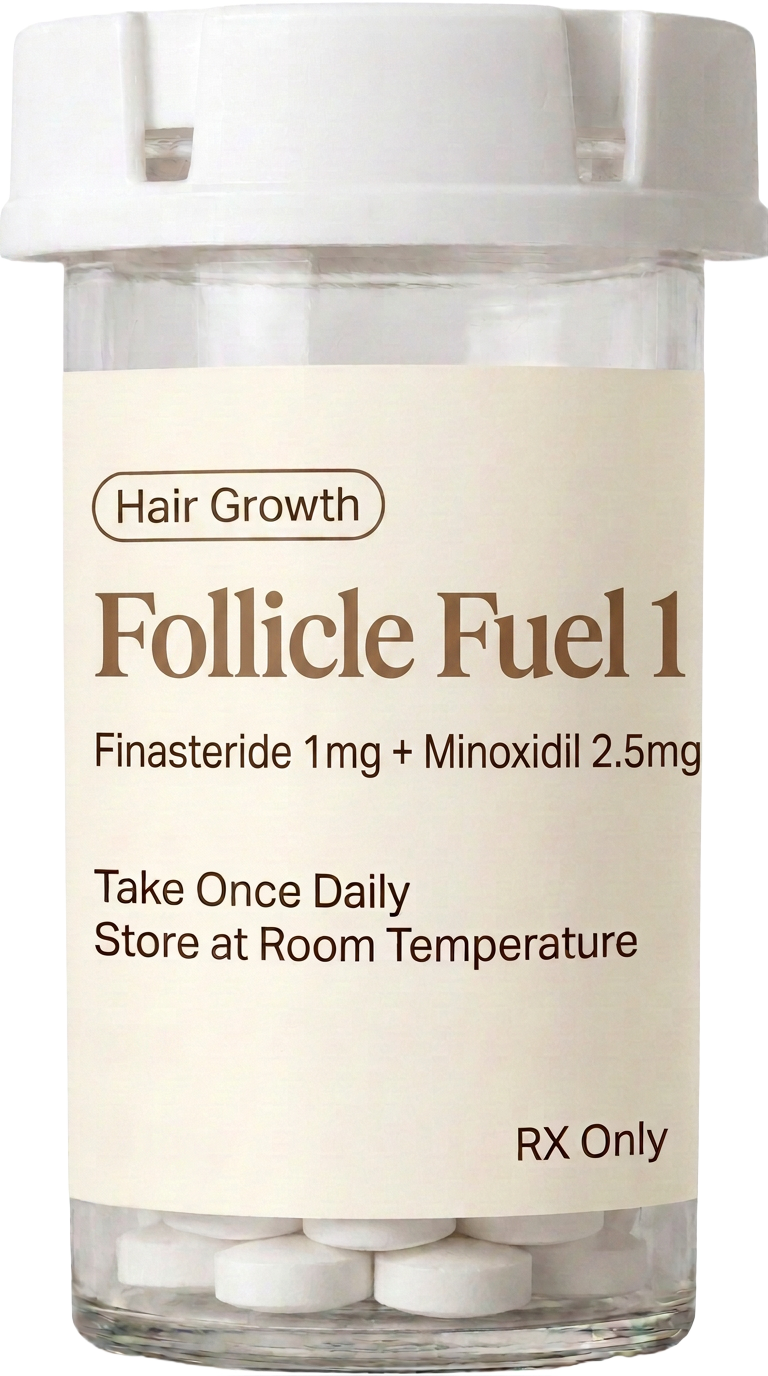
Follicle Fuel 1
Finasteride 1 mg, minoxidil 2.5 mg, biotin 1 mg, vitamin D3 2000 IU, and vitamin K2 100 mcg.
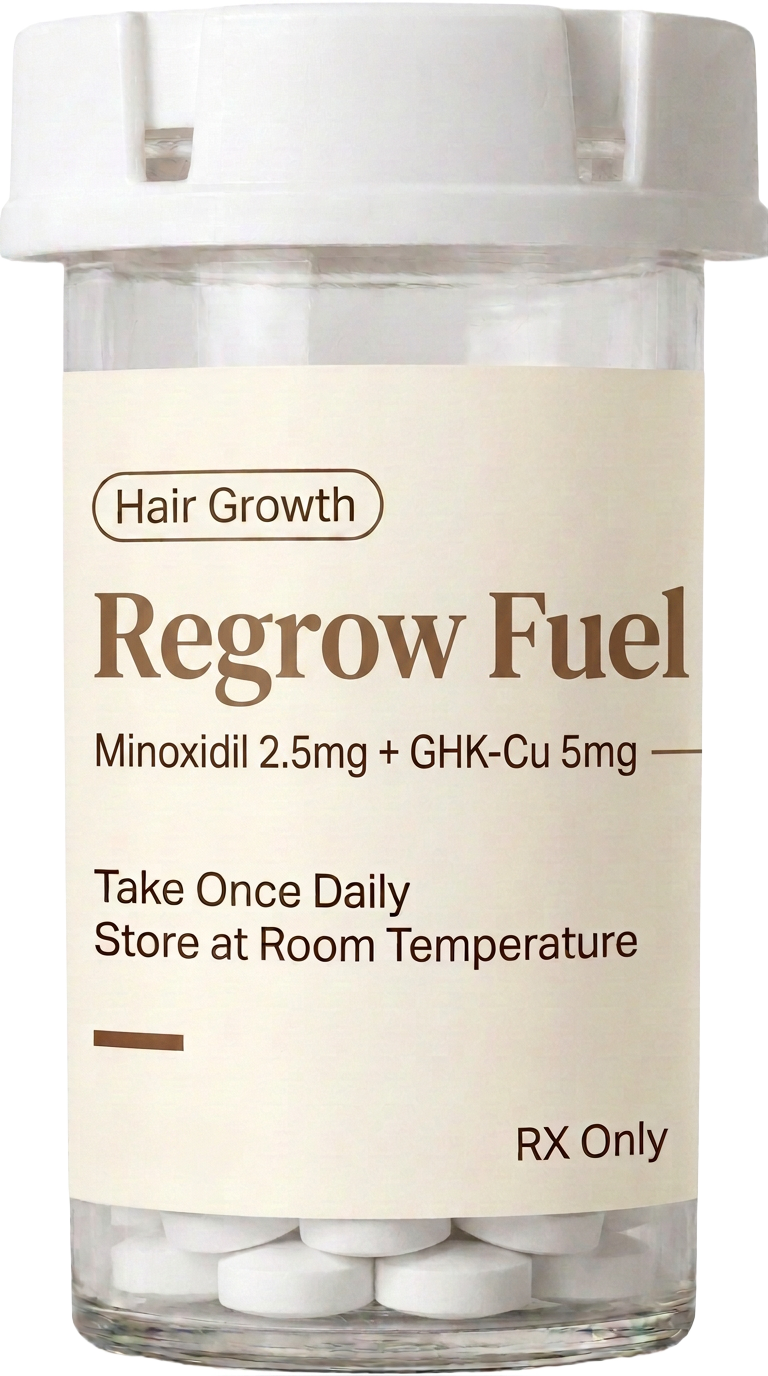
Regrow Fuel
Minoxidil 2.5 mg paired with GHK-Cu 5 mg, apigenin 50 mg, and fisetin 50 mg for follicle support.
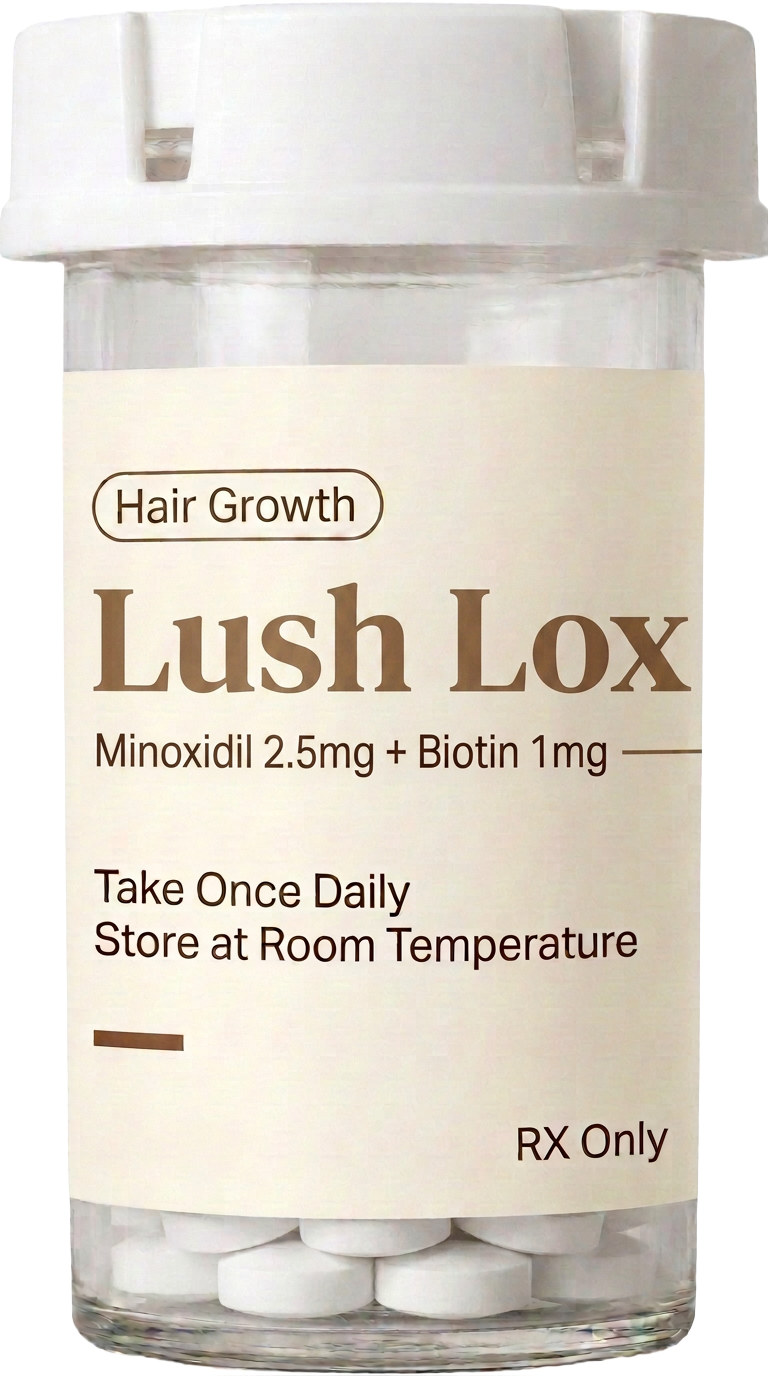
Lush Lox
Minoxidil 2.5 mg with biotin 1 mg, vitamin D3 2000 IU, and vitamin K2 100 mcg — no hormonal ingredients, for women and men.
How oral hair loss treatment works
Male pattern hair loss is driven by a mix of genetics and hormones — most notably DHT, a byproduct of testosterone that shrinks follicles over time. Effective treatment targets that process from the inside so follicles stay active and hair cycles stay long enough to produce visible density.
Oral finasteride lowers circulating DHT. Oral minoxidil widens small blood vessels and extends the growth phase of the hair cycle. They work through different mechanisms, which is why many patients use them together for better combined results.
Because both are oral, there's no daily foam, no scalp residue, and nothing to time around your shower. That simplicity is why adherence — and results — tend to be dramatically better than with topicals alone.
Why patients choose Taggs for hair care
Every prescription is filled by a US pharmacy under a US-licensed clinician's review — no gray-market sourcing.
Check-ins at month 3 and month 6 catch shedding phases, plateaus, or side effects early.
Discreet monthly delivery in plain packaging. Skip, pause, or cancel from your account.
Finasteride and oral minoxidil are commonly stacked. We make it simple to run both under one plan.
Compare options
| Follicle Fuel 1 | Regrow Fuel | Lush Lox | |
|---|---|---|---|
| Format | Daily capsule | Daily capsule | Daily capsule |
| Hormonal? | Yes — contains finasteride | No | No |
| Who it's for | Men only | Women and men | Women and men |
| Mechanism | Blocks DHT and prolongs the growth phase | Prolongs the growth phase plus peptide and flavonoid support | Prolongs the growth phase plus vitamin cofactors |
| Best for | Crown and mid-scalp thinning | Plateaued topical response | DAILY TABLET |
| Timeline | Less shedding by ~month 3, density gains by ~month 6 | Less shedding by ~month 2–3, regrowth by ~month 4–6 | Less shedding by ~month 2–3, regrowth by ~month 4–6 |
| Common side effects | Uncommon; small share report sexual side effects | Mild fluid retention or increased body hair in some | Mild fluid retention or increased body hair in some |
How to choose
- Start with Follicle Fuel 1 ifYou're a man with crown or mid-scalp thinning and want to slow the underlying hormonal driver.
- Start with Regrow Fuel ifYou've disliked topicals or a topical routine plateaued, and you'd rather skip hormonal treatment.
- Start with Lush Lox ifYou want hormone-free regrowth support with vitamin cofactors — the usual pick for women.
Is oral hair treatment right for you?
- You're noticing gradual thinning, a receding hairline, or crown loss over months or years.
- You've tried topical minoxidil and disliked the routine, greasiness, or shedding.
- You want a once-daily pill instead of a multi-step scalp regimen.
- You're ready to commit for at least 6 months to give the follicle cycle time to shift.
- Your hair loss came on suddenly or in patches (may need a different diagnosis).
- You're currently pregnant, planning pregnancy, or breastfeeding — finasteride is contraindicated.
- You have low blood pressure or a heart condition your clinician hasn't cleared for oral minoxidil.
- You're looking for cosmetic results in under 60 days — regrowth takes months, not weeks.
Common questions
How long until I see results?+
Most patients notice reduced shedding around month 2–3 and visible density improvements by month 6. Consistent daily use is important — stopping resets the progress.
Can I take finasteride and minoxidil together?+
Often yes. They work through different mechanisms, so they're commonly combined. Your clinician will confirm it's a fit based on your intake.
Are there side effects?+
Both are generally well tolerated at low doses. Finasteride can cause sexual side effects in a small share of patients. Oral minoxidil can cause mild fluid retention or increased body hair. Your clinician monitors you throughout treatment.
What happens if I stop?+
These medications maintain results as long as you take them. Stopping typically leads to a gradual return to your prior rate of loss over 6–12 months.
Is there a 'shedding phase' when I start?+
Some patients see a temporary increase in shedding in the first 4–8 weeks as follicles cycle into a new growth phase. It's a normal early signal, not a setback.
Do I need bloodwork?+
Usually not to start. Your clinician reviews your intake and medical history first and orders labs only if something warrants a closer look.
Will I need to take these forever?+
For continued results, yes — hair loss is a chronic process. Some patients taper the dose after significant regrowth; your clinician will guide that decision.