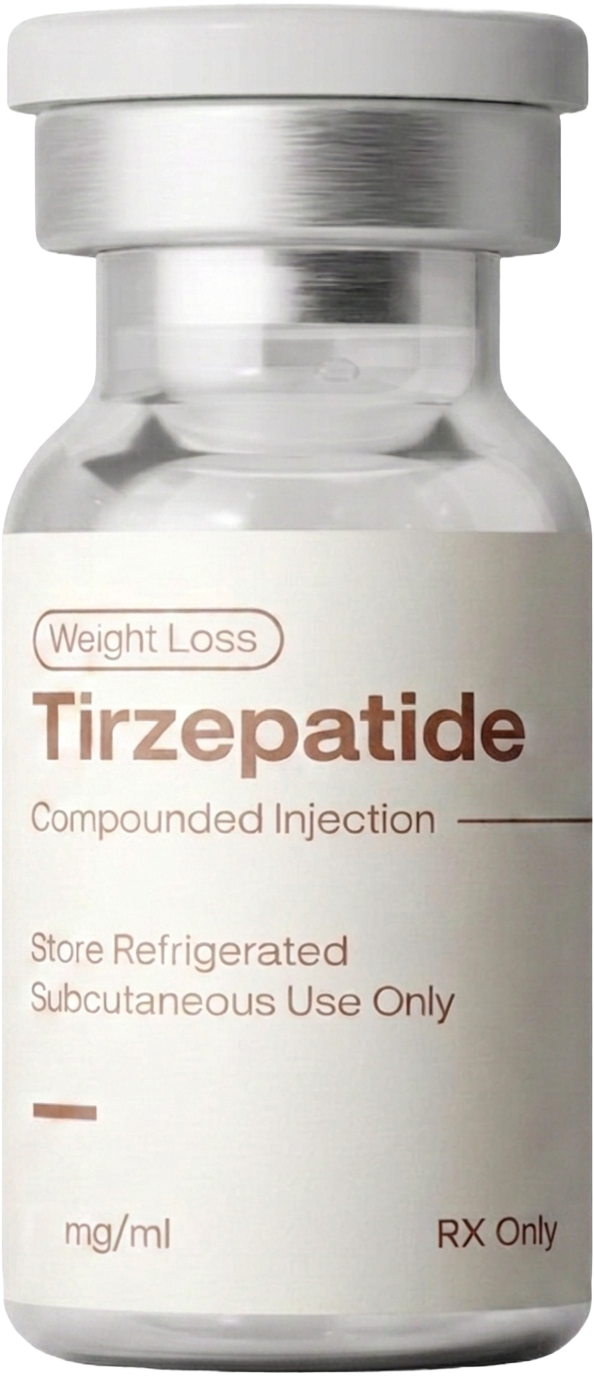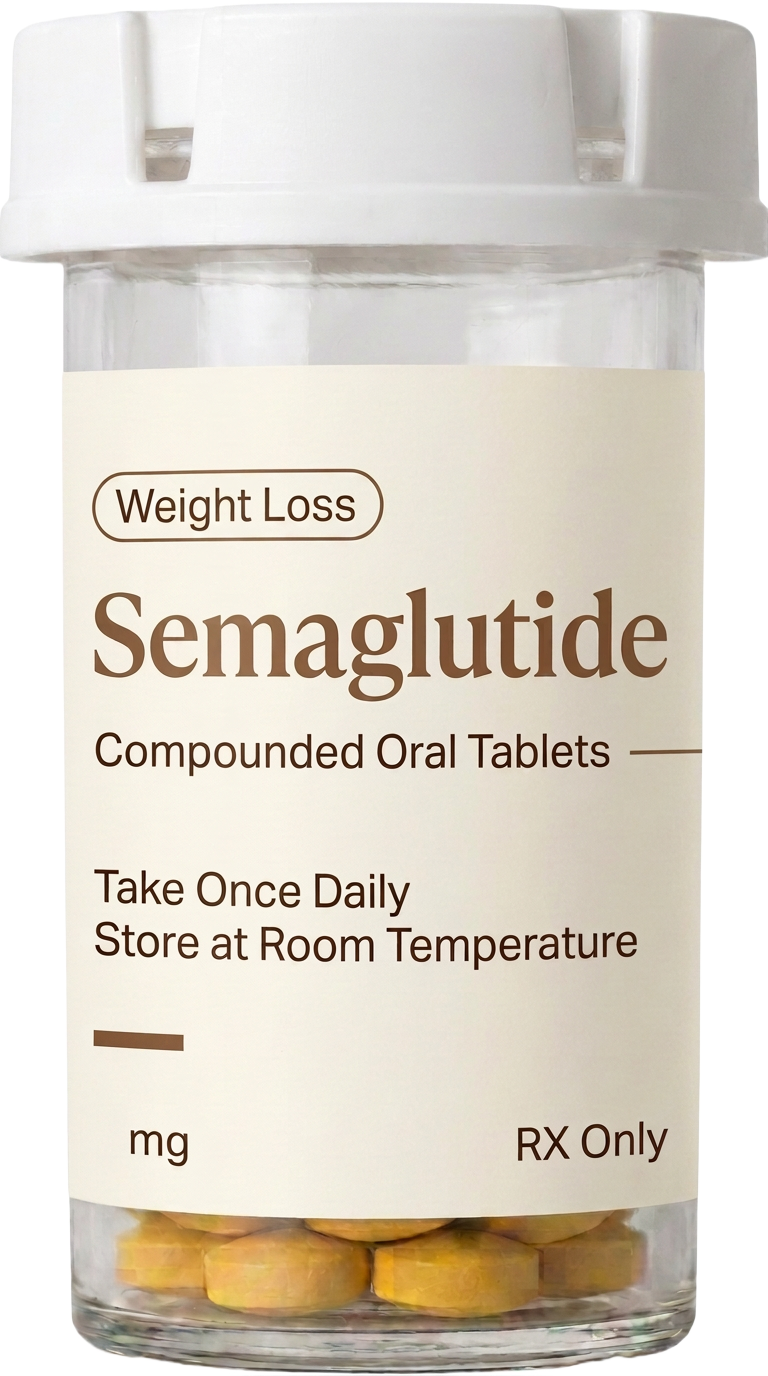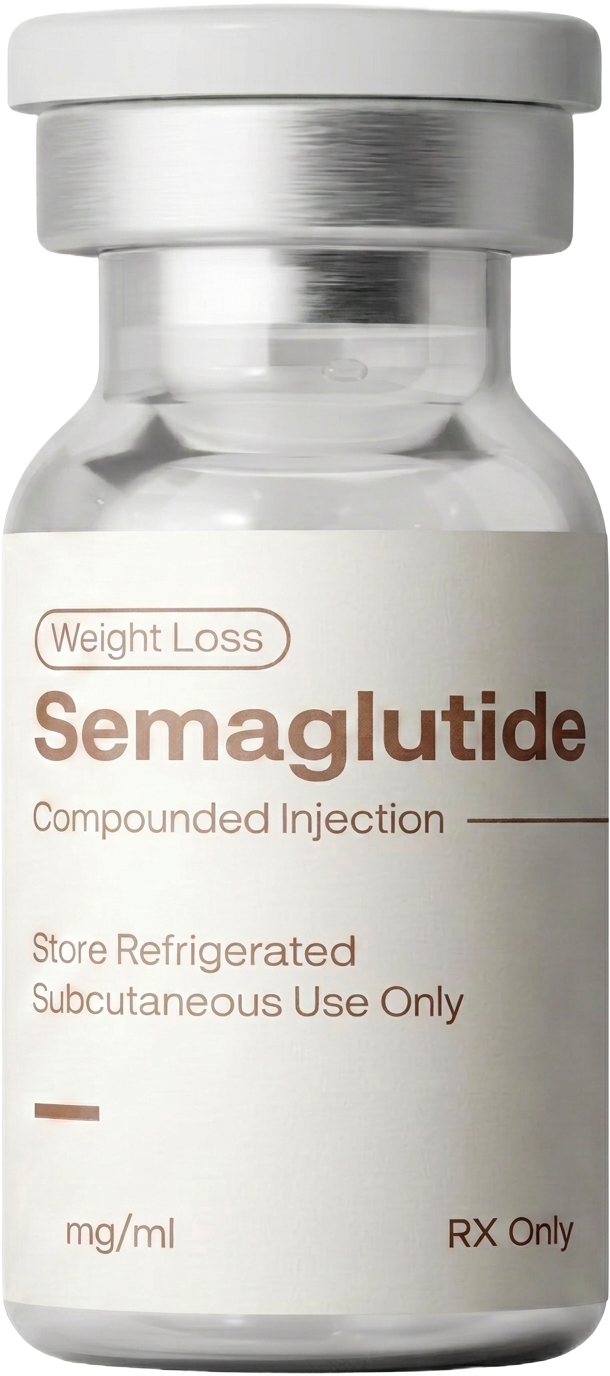
Semaglutide
A once-weekly GLP-1 with a gentle titration. A common first step for steady appetite control and consistent weight loss.
Quietly effective, clinician-guided.
A once-weekly GLP-1 that turns down food noise and helps you eat to fullness sooner. A gentle titration makes it a common first step for GLP-1 care.
How it works
Semaglutide mimics GLP-1, a hormone your gut releases after meals. It signals to your brain that you're satisfied and slows how quickly food leaves your stomach, so smaller portions feel like enough.
Most patients describe the shift as "food noise turning down" — fewer cravings, less snacking, and steadier meals without the mental tug-of-war. Your dose starts low and steps up in small increments so your body has time to adjust, and your clinician stays in the loop the whole way.
What to expect
- CadenceOnce-weekly self-injection at home.
- DosingStarts at 0.25 mg/week and titrates up to 2.5 mg as tolerated.
- ResponseGradual, steady appetite reduction over weeks and months.
- DeliveryShips with a fine-gauge needle for a simple, comfortable weekly injection.
- Side-effect patternMild GI symptoms (nausea, reflux) early in titration that usually settle.
Who it's for
Semaglutide is a fit for most adults who want steady, clinician-guided weight loss and a gentle on-ramp to GLP-1 therapy. It's not a fit for everyone — a short intake tells us which.
- Adults 18+ with a BMI of 27+ (or 25+ with a weight-related condition).
- New to GLP-1 therapy and want a slow, well-tolerated first step.
- Comfortable with a once-weekly at-home injection.
- Looking for consistent, monthly progress rather than rapid loss.
- —Personal or family history of medullary thyroid carcinoma or MEN 2.
- —History of pancreatitis, severe GI disease, or gastroparesis.
- —Currently pregnant, planning pregnancy, or breastfeeding.
- —Under 18, or with a BMI below the clinical threshold.
Your first 90 days
Progress on semaglutide is meant to be quiet and cumulative. Titration is slow on purpose — the goal is to find the lowest dose that gives you meaningful appetite control with the fewest side effects.
Titration ceiling: 2.5 mg weekly. Steps happen roughly every four weeks and only when tolerance allows — many patients settle well below the ceiling.
- Days 1–300.25 mg weeklyOnboarding at 0.25 mg
Your first weekly dose starts at 0.25 mg. Most people notice a subtle drop in cravings and a smaller appetite by week two or three. Mild nausea or reflux can show up early and usually settles as your body adjusts.
- Days 31–600.5 mg weeklyStep up to 0.5 mg
If tolerance is good, your clinician moves you to 0.5 mg. Portions feel naturally smaller, snacking drops, and the scale typically shows steady weekly change. This is when the routine starts to feel automatic.
- Days 61–901 mg weeklyDial in the working dose
Depending on your response, you'll hold or step up again (often to 1.0 mg). By day 90, most patients have a clear sense of what dose gives them appetite control without side-effect noise — that dose is what you settle into.
Worried about side effects?
Nausea, constipation and reflux are the most common semaglutide side effects — usually mild, usually early, and largely a function of how fast you titrate.
Read the GLP-1 side-effect guideWondering what "compounded" means?
Compounded semaglutide is prepared for you by a licensed 503A or FDA-registered 503B pharmacy. Here is how that is regulated, where it stands legally, and what it costs next to the brand-name pens.
Read the compounded GLP-1 guideHow to get it onlineWhat the average patient loses
Weight loss on semaglutide is gradual. The numbers below reflect averages reported in the largest GLP-1 trials and are meant as a realistic reference, not a promise — response varies with dose, adherence, food and movement.
Early response as titration reaches a working dose.
Momentum builds as appetite control stabilizes.
Typical average at maintenance dose in long-term studies.
Averages are of total body weight loss and are drawn from published GLP-1 trials of semaglutide (e.g., STEP program). Individual results vary and are not guaranteed.
Semaglutide
A once-weekly GLP-1 with a gentle titration. A common first step for steady appetite control and consistent weight loss.