Keep what you have. Grow back what you can.
Male pattern hair loss is driven by DHT — a hormone that gradually shrinks hair follicles until they stop producing visible hair. We prescribe oral treatments that target that root cause and re-open follicles that haven't yet closed for good.
How these treatments work
- Finasteride blocks DHTIt inhibits the enzyme (5-alpha reductase) that converts testosterone into DHT — the hormone doing most of the follicle damage. Less DHT means follicles stop shrinking.
- Minoxidil re-opens folliclesIt widens the blood vessels around the follicle and pushes hairs from the resting phase back into active growth. Best used consistently, daily.
- Better together than aloneStudies consistently show combining the two out-performs either one solo. Your clinician decides whether one or both is right for you.
- Consistency > intensityHair grows on a slow clock. You'll usually see reduced shedding by month 3 and visible regrowth around month 4–6. Stopping resets the clock.
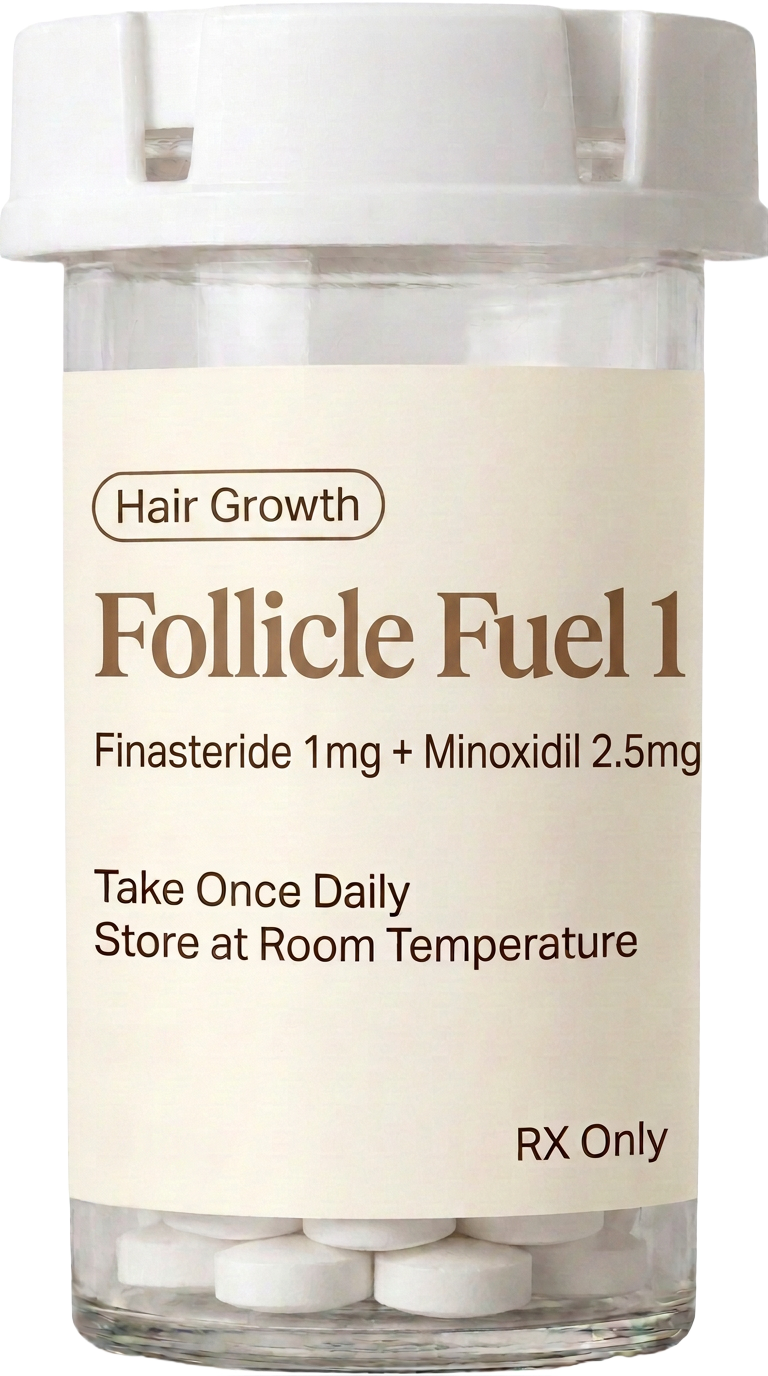
Follicle Fuel 1
Finasteride 1 mg + minoxidil 2.5 mg + biotin 1 mg + vitamin D3 2000 IU + vitamin K2 100 mcg in one daily capsule.
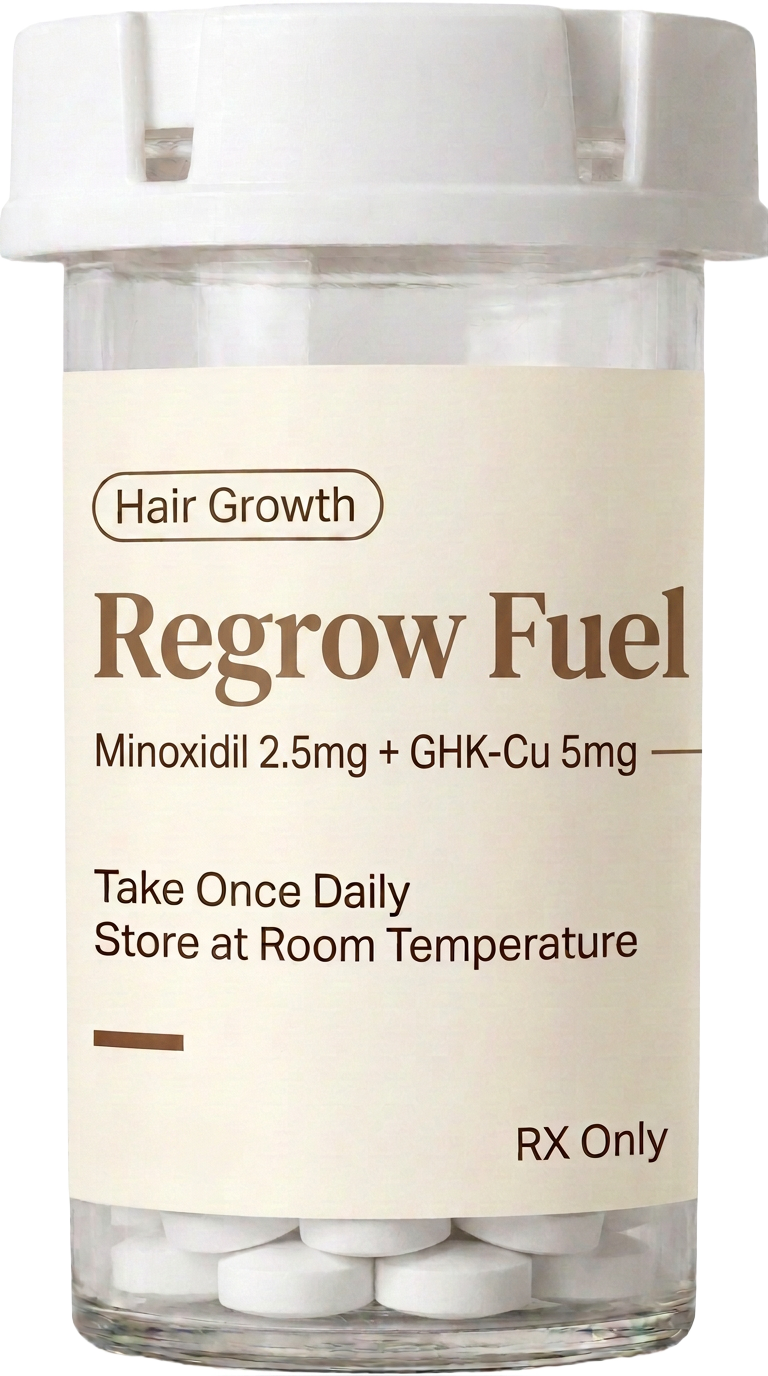
Regrow Fuel
Minoxidil 2.5 mg + GHK-Cu 5 mg + apigenin 50 mg + fisetin 50 mg — regrowth support without a topical routine.
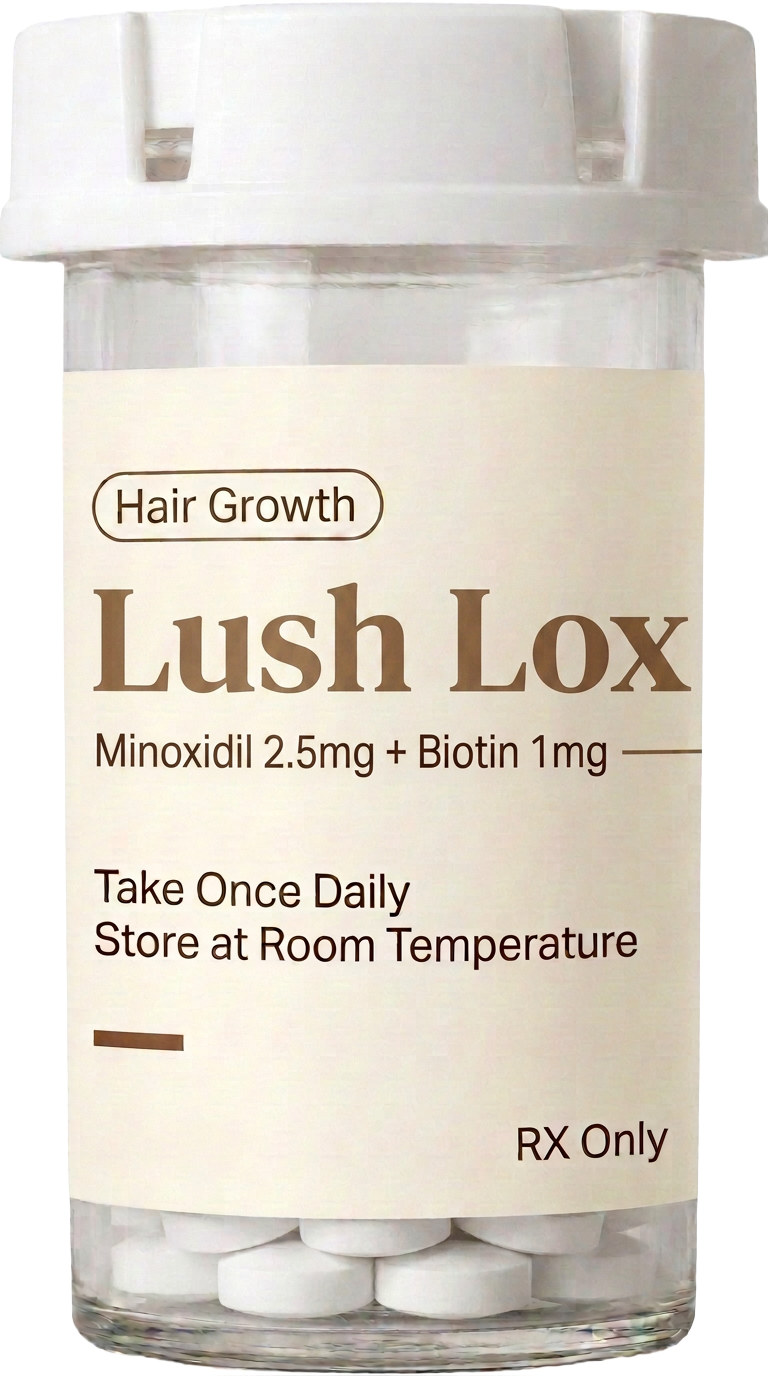
Lush Lox
Minoxidil 2.5 mg + biotin 1 mg + vitamin D3 2000 IU + vitamin K2 100 mcg — hormone-free, for women and men.
Follicle Fuel 1 vs. Regrow Fuel vs. Lush Lox
They're often talked about as alternatives, but they aren't. Finasteride protects the follicles you still have by removing the hormone that's shrinking them. Oral minoxidil works downstream — improving blood flow to the follicle and holding it in its growth phase longer. One defends, the other rebuilds. Lush Lox keeps the regrowth side without any hormonal ingredient, so it works for women and men.
Why they're prescribed together
Male pattern hair loss runs on two tracks at once: DHT keeps miniaturizing follicles, and the follicles that are still alive spend too much time resting instead of growing. Treating only one track means you're still losing ground on the other — which is why finasteride and minoxidil together consistently outperform either one used alone.
Taking minoxidil as a low-dose tablet instead of a topical also removes the most common reason people quit: the daily scalp routine, the irritation, and the residue. Adherence is the strongest predictor of results, so the format that you'll actually keep up with usually wins.
Both are prescription medications. Your Taggs clinician reviews your intake and decides whether you start with one, both, or neither.
How long results take
- Months 1–2Biology first, mirror later
DHT levels drop within days of starting finasteride, and minoxidil begins pushing follicles into an active phase. Some patients see a brief uptick in shedding — that's old hairs being replaced, and it settles.
- Month 3Shedding slows
Fewer strands in the shower and on the pillow. This is the first reliable sign the treatment is doing its job.
- Months 4–6Visible regrowth
Fine new hairs appear at the crown and mid-scalp, and existing hair looks thicker. This is where side-by-side photos start to show a difference.
- Months 9–12Density consolidates
New hairs mature and thicken. Your clinician reviews progress and adjusts the plan. Stopping now reverses gains over the following 6–12 months.
Common questions
Can you take finasteride and minoxidil together?
Yes — they are routinely prescribed together because they work on different parts of the same problem. Finasteride lowers DHT so follicles stop shrinking, while minoxidil pushes resting follicles back into an active growth phase. A Taggs clinician reviews your intake and decides whether one or both is appropriate for you.
What is the difference between finasteride and minoxidil?
Finasteride is a daily tablet that blocks the enzyme converting testosterone into DHT, the hormone behind male pattern hair loss — it is primarily preventative. Minoxidil widens the blood vessels feeding the follicle and extends the growth phase, which is what drives visible regrowth.
Is oral minoxidil better than topical minoxidil?
Low-dose oral minoxidil avoids the daily topical routine, the scalp irritation, and the greasy residue that make many people quit topical treatment. Because adherence is the biggest predictor of results, patients who struggle with topicals often do better on the tablet. It requires a prescription and clinician monitoring.
How long before finasteride and minoxidil work?
Reduced shedding is usually noticeable around month 3, and visible regrowth typically appears between months 4 and 6. Results continue to build through month 12. Stopping treatment reverses progress over the following 6 to 12 months.
Do I need a prescription for oral minoxidil and finasteride?
Yes. Both are prescription medications. You complete an online assessment, a US-licensed clinician reviews it, and if appropriate your treatment ships free and discreetly to your door with ongoing check-ins.
What to expect
Most patients notice reduced shedding within 3 months. Visible regrowth typically shows up around month 4–6 and continues with consistent use.
- Free discreet shipping
- Ongoing clinician check-ins
- No membership — cancel anytime
- US-licensed providers